
What a Hafiz sponsorship carries
Hafiz candidates memorise the entire Qur'an – a path that takes several years. Over that time a sponsorship contributes towards accommodation, food and tuition at the student home.

Hafiz sponsorship and education that lasts
 Neu
Neu Popular
 Neu
Neu Mit Zertifikat
 Mit Zertifikat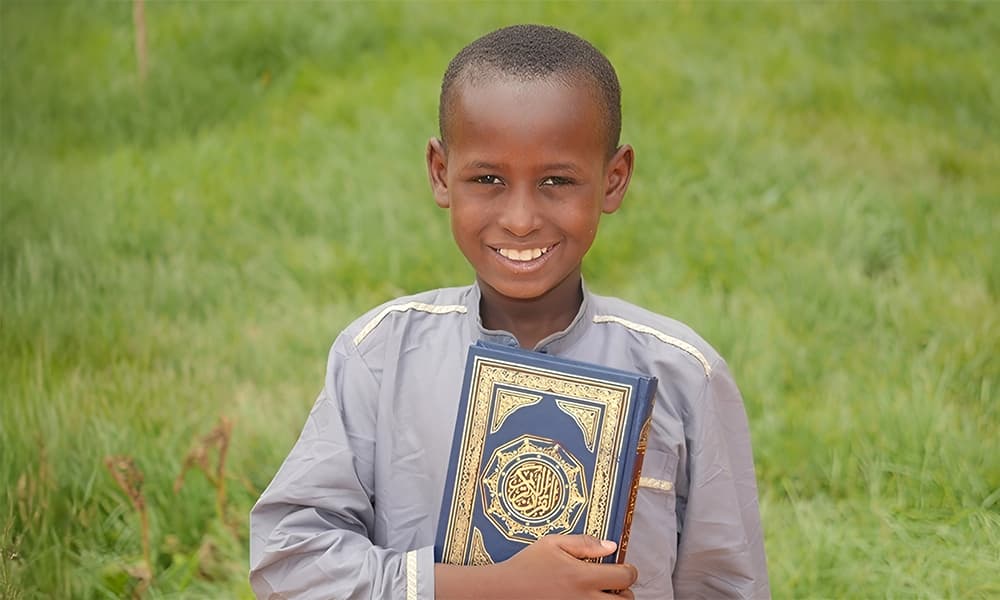


Hafiz candidates memorise the entire Qur'an – a path that takes several years. Over that time a sponsorship contributes towards accommodation, food and tuition at the student home.
Not every kind of support has to be long-term. A copy of the Qur'an, a rahle book rest, a student allowance or dates for the student home reach the students straight away.
Knowledge that is passed on counts as continuing charity. Supporting the education of a student or Hafiz means taking part in an effect that outlasts the donation itself.
It covers a student's accommodation, food and tuition during their Hafiz education. You can choose a 6-month or 12-month period.
Yes. Alongside sponsorships you can donate individual Qur'an copies, book rests or student allowances.
Memorising the Qur'an in full usually takes several years. A sponsorship is therefore taken on for a 6- or 12-month term, and you can continue your support with a new sponsorship once that term ends.
A rahle is a low, folding book rest on which the Qur'an is placed while reading. A rahle donation equips student homes and classrooms with them.
A Hafiz sponsorship means covering a student's basic needs and education costs so they can memorise the whole Qur'an. It is a sadaqah jariyah: every letter the Hafiz later recites brings reward to you as well.
You can support students at our Hafiz madrasahs in Indonesia, Bangladesh, the Philippines, Cambodia and Malaysia, as well as students in need in African countries.
In Africa especially, many madrasahs do not have enough copies of the Qur'an. Children learn using wooden boards called 'löh': verses are written on the board and memorised, then wiped off so new verses can be written. A Qur'an donation helps close that gap.
A student allowance is financial support for orphans and for students from families without means who are studying at madrasahs and Qur'an schools, so they can cover their daily needs. It is passed on through the institutions where the students study.