

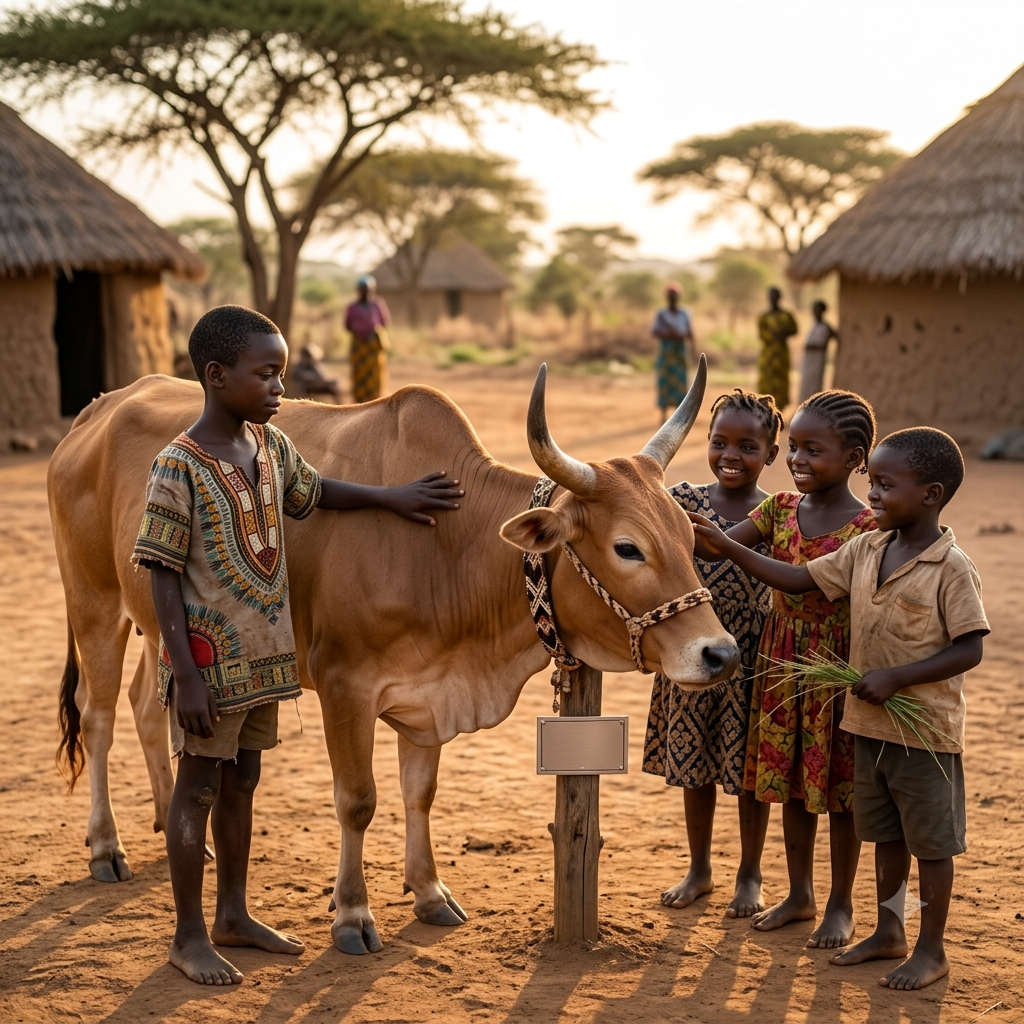
Qurbani (Udhiyah) Guide: Meaning, Timing, and How Your Donation Reaches Families in Need
Every year around Eid al-Adha, millions of Muslims around the world ask the same practical question: what exactly is Qurbani, am I required to give it, and what actually happens to the meat once I donate? This guide answers all three, and explains how ILA Europe turns a single Qurbani share into a real meal for a family that would otherwise go without meat for the entire year.
What is Qurbani (Udhiyah)?
Qurbani — also known as Udhiyah — is the ritual sacrifice of a permissible animal (sheep, goat, cow, or camel) during the days of Eid al-Adha, commemorating Prophet Ibrahim's (peace be upon him) willingness to sacrifice his son Ismail in obedience to Allah, and Allah's mercy in replacing him with a ram. It is performed in remembrance of that ultimate act of submission, not as a means of forgiveness for sins.
The meat from a Qurbani sacrifice is traditionally divided into three parts: one for the household performing the sacrifice, one for relatives and friends, and one for the poor and needy. Charities that organise Qurbani on your behalf, including ILA Europe, focus the distribution on families who cannot otherwise afford meat, particularly in regions affected by poverty, conflict, or natural disaster.
Who is required to give Qurbani?
According to the majority of scholars, Qurbani is wajib (obligatory) upon every adult Muslim who possesses wealth above the nisab threshold (the same threshold used for Zakat eligibility) on the day of Eid, and remains so on the following two days. It is not restricted to those who pay Zakat — someone can be below the Zakat threshold across the year yet still meet the nisab on the days of Qurbani, in which case Qurbani still applies to them.
- It is due on every eligible adult individually — a husband and wife who both meet the nisab should each give a share.
- One share of a cow or camel (from a possible seven) is equivalent to one full goat or sheep.
- It cannot be given on behalf of the deceased unless they specifically willed it, though a supererogatory (nafl) Qurbani can be dedicated to them.
When must Qurbani be performed?
Qurbani can only be offered during the three days of Eid al-Adha — the 10th, 11th, and 12th of Dhul Hijjah — after the Eid prayer has been performed in that locality. A sacrifice made before the Eid prayer, or after sunset on the 12th of Dhul Hijjah, does not count as Qurbani. This is precisely why organisations coordinate logistics, transport, and distribution well in advance: the animals must be sourced, slaughtered according to Islamic requirements, and the meat distributed, all within this narrow three-day window.
How ILA Europe delivers your Qurbani
When you give your Qurbani donation through ILA Europe, your contribution is pooled with others to purchase healthy, permissible livestock directly from local farmers in the regions where the need is greatest. This keeps money circulating in local economies rather than importing meat, supports local farmers, and ensures the meat reaches families the same day it is slaughtered.
- Sourced locally: Animals are purchased from vetted local farmers and suppliers, verified for health and suitability under Islamic guidelines.
- Slaughtered correctly: Sacrifice is carried out according to Islamic rites, supervised by trained local teams.
- Distributed fast: Fresh meat is distributed to registered families in need within the same day, prioritising orphans, widows, and households with no other source of protein.
- Documented: Where possible, distribution is photographed and reported back so donors can see the impact of their share.
Because a single cow or camel share can be split between up to seven people, and a full goat or sheep counts as one share, it is possible to fulfil your obligation and help several families at a modest cost per person.
Why give your Qurbani through a charity abroad?
Performing Qurbani through a trusted organisation lets your sacrifice reach communities where meat is genuinely scarce — regions affected by drought, displacement, or chronic poverty — rather than a household that already has regular access to meat. It also removes the logistical burden of finding, slaughtering, and distributing an animal yourself, while still fulfilling the religious obligation in full, provided the organisation follows the correct Islamic requirements from purchase through to distribution.
Ready to fulfil your Qurbani this year? Give your Qurbani donation through ILA Europe and let a family break their year of hunger for meat with a proper Eid meal.
Frequently asked questions
Ready to support Kurban projects?
You may also like
 General
Mongolia Winter Aid: One Sack of Coal, One Warm Home
In one of the coldest capitals in the world, a single sack of coal decides whether a family spends the winter freezing or with hope. Just €25 delivers 250 kg of heating coal to a family in need.
 General
What Are the Kandil Nights? The 2026 Calendar of Blessed Days and Their Meanings
The meaning of the five great Kandil nights, the other blessed days, and every 2026 date in one calendar — including Mawlid al-Nabi on 24 August 2026.