

What Are the Kandil Nights? The 2026 Calendar of Blessed Days and Their Meanings
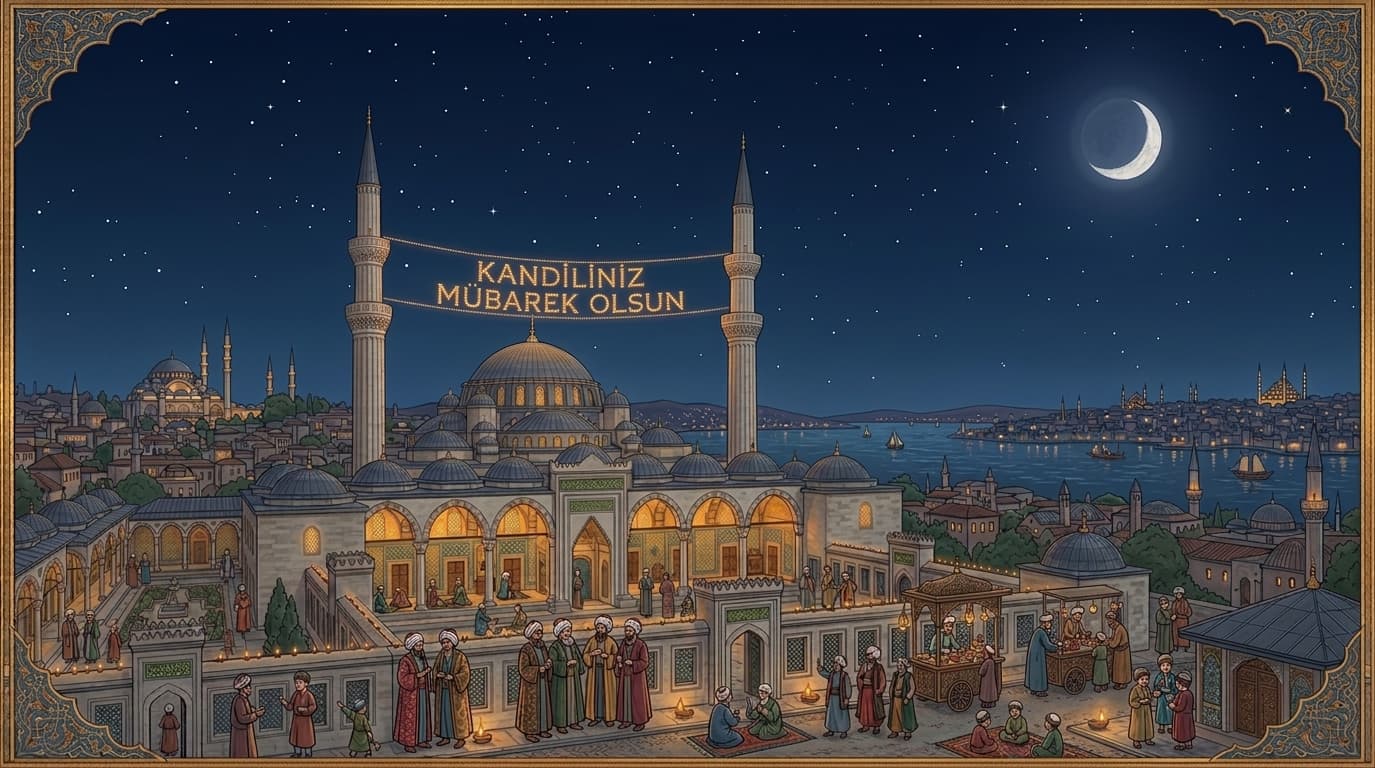
The Kandil nights are the most treasured blessed nights and days of the Islamic calendar. The name itself is Ottoman: oil lamps — kandil in Turkish — were lit on the minarets of mosques on these nights, and the word stayed. The Qur'an makes it plain that not all moments carry the same weight and that some nights stand apart in spiritual value: Surah al-Qadr states that one blessed night is better than a thousand months.
This guide brings together the five great Kandil nights, the other blessed days, and all of their 2026 dates. The next blessed night of 2026 is Mawlid al-Nabi, observed on the evening of Monday, 24 August.
Why Blessed Days and Nights Matter
The Qur'an gives great weight to time itself. Surah al-Asr swears an oath by time; Surah al-Qadr declares one particular night better than a thousand months. Together they establish a principle of Islamic belief: moments are not interchangeable, and certain days and nights are distinguished in spiritual value.
Islamic scholars describe the Kandil nights as “seasons of good”. Acts of worship performed on them — supplication, repentance, charity, recitation of the Qur'an — are reported to carry greater spiritual weight than at other times. At the same time, the first condition of honouring these hours is to keep away from sin. For how the acts of worship fit together as a whole, see our guide to the 5 Pillars of Islam.
Where the Name “Kandil” Comes From
The word used today is the leftover of a lighting practice. The Ottomans kept the blessed nights by illuminating mosques, dervish lodges, bazaars, streets and palaces, and by lighting oil lamps on the minarets. Because of that practice, from the reign of Sultan Selim II (1566-1574) onwards the five nights known as leyalî-i mübareke — Mawlid, Raghaib, Mi'raj, Bara'at and Qadr — came to be called kandil nights in common speech.
Mawlid al-Nabi held a place of its own among the five. A set ceremony in the great mosques marking the birth of the Prophet (peace be upon him), with Süleyman Çelebi's Mevlid recited by fine-voiced mevlithans, grew in time into one of the state's official ceremonies. The procession held for the night — the Mevlid Alayı — and the ceremony performed after it entered the front rank of Ottoman state occasions, and found their way into the travel accounts of foreign visitors and even into painters' engravings (Yedikıta magazine, issue 53).
The Five Great Kandil Nights: Names, Meanings and 2026 Dates
Laylat al-Raghaib — The First Thursday Night of Rajab
Falling on the first Thursday night of Rajab, Laylat al-Raghaib is regarded as the spiritual threshold announcing the start of the “Three Holy Months”. The word raghaib means “to desire or long for something” in Arabic. It is narrated that on this night the angels gather at the Kaaba, and that Allah Almighty, honouring this night, declares forgiveness for those who fast in the month of Rajab (Durrat al-Nasihin).
2026 date: Thursday, 10 December 2026 (1 Rajab 1448)
Laylat al-Mi'raj — The 27th Night of Rajab
The Qur'an says:
سُبْحَانَ الَّذِي أَسْرَى بِعَبْدِهِ لَيْلًا مِنَ الْمَسْجِدِ الْحَرَامِ إِلَى الْمَسْجِدِ الْأَقْصَى الَّذِي بَارَكْنَا حَوْلَهُ لِنُرِيَهُ مِنْ آيَاتِنَا إِنَّهُ هُوَ السَّمِيعُ الْبَصِيرُ
Subhana alladhi asra bi-abdihi laylan min al-Masjid al-Harami ila al-Masjid al-Aqsa alladhi barakna hawlahu li-nuriyahu min ayatina, innahu huwa al-sami al-basir.
“Glory be to Him who took His servant by night from the Sacred Mosque to the Farthest Mosque, whose surroundings We have blessed, in order to show him some of Our signs. Indeed, He is the All-Hearing, the All-Seeing.” (al-Isra, 17:1)
On this miraculous night the Prophet Muhammad was taken from the Sacred Mosque in Mecca to the Aqsa Mosque in Jerusalem, and from there, passing beyond the Lote Tree of the Utmost Boundary, into the presence of Allah. It was on this night that the five daily prayers were made obligatory. Set at fifty prayers at first, they were reduced to five through the Prophet's supplication, following the counsel of the Prophet Musa (Durrat al-Nasihin).
2026 date: Thursday, 15 January 2026 (27 Rajab 1447)
Laylat al-Bara'at — The 15th Night of Sha'ban
The word bara'at means acquittal or release: the night takes its name from Allah Almighty writing for His believing servants a decree of deliverance from Hellfire. According to some commentators, this verse of Surah al-Dukhan refers to the night of Bara'at:
إِنَّا أَنْزَلْنَاهُ فِي لَيْلَةٍ مُبَارَكَةٍ إِنَّا كُنَّا مُنْذِرِينَ فِيهَا يُفْرَقُ كُلُّ أَمْرٍ حَكِيمٍ
Inna anzalnahu fi laylatin mubarakatin inna kunna mundhirin. Fiha yufraqu kullu amrin hakim.
“By the clear Book — indeed, We sent it down during a blessed night, for We were to warn mankind. On that night every matter of wisdom is made distinct by a command from Us. Truly We send messengers as a mercy from your Lord. Indeed, He is the All-Hearing, the All-Knowing.” (al-Dukhan, 44:3-4)
A hadith reports that on this night Allah Almighty forgives everyone except those who associate partners with Him, practise sorcery, drink intoxicants, sever ties of kinship, or disobey their parents (Durrat al-Nasihin, from Ibn Majah). It is also narrated that Jibril (peace be upon him) gave the glad tidings that three hundred gates of mercy open on this night. Supplication, repentance and recitation of the Qur'an are its principal acts of worship.
2026 date: Monday, 2 February 2026 (15 Sha'ban 1447)
Laylat al-Qadr — The 27th Night of Ramadan
Allah Almighty says:
إِنَّا أَنْزَلْنَاهُ فِي لَيْلَةِ الْقَدْرِ
Inna anzalnahu fi laylati al-Qadr.
“Indeed, We sent it (the Qur'an) down during the Night of Decree.” (al-Qadr, 97:1)
This is the night on which the revelation of the Qur'an began and which Surah al-Qadr declares better than a thousand months; among the five Kandil nights it carries the greatest significance. Alongside missed obligatory prayers, recitation of the Qur'an and repentance, this supplication is recommended on this night:
اللَّهُمَّ إِنَّكَ عَفُوٌّ تُحِبُّ الْعَفْوَ فَاعْفُ عَنِّي
Allahumma innaka afuwwun tuhibbu al-afwa fa'fu anni.
“O Allah, You are Forgiving and You love to forgive, so forgive me.”
Ramadan is also the month in which most zakat and fitrah is given; our zakat calculator works out what you owe.
2026 date: Monday, 16 March 2026 (27 Ramadan 1447)
Mawlid al-Nabi — The 12th Night of Rabi al-Awwal
Marked as the night the Prophet Muhammad came into the world, Mawlid al-Nabi is spent sending salutations upon him and recounting his life and exemplary character. Islamic scholars have described it as being among the most precious nights after Laylat al-Qadr.
2026 date: Monday, 24 August 2026 (12 Rabi al-Awwal 1448)
Other Important Blessed Days
Ashura — The 10th Day of Muharram
The word ashura derives from the Arabic ashara, meaning “ten”. The day is held to mark the anniversary of the deliverance of Prophet Nuh's ark from the flood and of Prophet Musa's escape from Pharaoh through the Red Sea.
2026 date: Thursday, 25 June 2026 (10 Muharram 1448)
The Day of Arafah and Eid al-Adha
Arafah, the 9th day of Dhul Hijjah, is the day of the standing at Arafat during Hajj and is counted by Islamic scholars among the most virtuous days of the year. In Surah al-Fajr, Allah Almighty swears an oath by these ten nights:
وَالْفَجْرِ وَلَيَالٍ عَشْرٍ
Wa al-fajr. Wa layalin ashr.
“By the dawn, and by the ten nights (the first ten nights of Dhul Hijjah).” (al-Fajr, 89:1-2)
The great majority of Islamic scholars hold that the “ten nights” of this verse are the first ten nights of Dhul Hijjah. Fasting on the Day of Arafah carries a particular merit: the Prophet (peace be upon him) reported that it is an expiation for the sins of the past year and the year to come. Eid al-Adha begins the following day and lasts four days — one of the two great festivals of Islam. For the meaning of Qurbani and the permitted times of slaughter, see our Qurbani Donation Guide.
2026 dates: Arafah: Tuesday, 26 May 2026 — Eid al-Adha: 27-30 May 2026
Eid al-Fitr — The 1st Day of Shawwal
Beginning on the 1st of Shawwal as Ramadan ends, Eid al-Fitr is one of the two great festivals of Islam and lasts three days.
2026 date: 20-22 March 2026 (1-3 Shawwal 1447)
The 2026 Calendar of Kandil Nights and Blessed Days
The table below sets the Hijri and Gregorian dates of 2026's blessed days and nights side by side:
| Blessed Day / Night | Hijri Date | Gregorian Date | Weekday |
|---|---|---|---|
| Laylat al-Mi'raj | 27 Rajab 1447 | 15 January 2026 | Thursday |
| Laylat al-Bara'at | 15 Sha'ban 1447 | 2 February 2026 | Monday |
| Start of Ramadan | 1 Ramadan 1447 | 19 February 2026 | Thursday |
| Laylat al-Qadr | 27 Ramadan 1447 | 16 March 2026 | Monday |
| Eid al-Fitr, day 1 | 1 Shawwal 1447 | 20 March 2026 | Friday |
| Day of Arafah | 9 Dhul Hijjah 1447 | 26 May 2026 | Tuesday |
| Eid al-Adha, day 1 | 10 Dhul Hijjah 1447 | 27 May 2026 | Wednesday |
| Islamic New Year 1448 | 1 Muharram 1448 | 16 June 2026 | Tuesday |
| Ashura | 10 Muharram 1448 | 25 June 2026 | Thursday |
| Mawlid al-Nabi | 12 Rabi al-Awwal 1448 | 24 August 2026 | Monday |
| Laylat al-Raghaib | 1 Rajab 1448 | 10 December 2026 | Thursday |
Because the Hijri calendar is lunar, these dates move roughly 10-11 days earlier in the Gregorian calendar each year. The dates above follow the 2026 religious days list of Fazilet Takvimi; depending on the sighting of the moon, some countries may observe them one day apart.
What Is Done on the Kandil Nights?
Worship on these nights is not an extraordinary ceremony — it is the familiar acts of worship performed more deliberately and more sincerely:
- Recitation of the Qur'an: a juz, or as much as one is able.
- Missed and voluntary prayers: missed obligatory prayers come first.
- Repentance and seeking forgiveness: forgiveness is the shared emphasis of every Kandil night.
- Salutations upon the Prophet: especially on Mawlid al-Nabi.
- Keeping family ties: visiting relatives, the sick and the elderly, and ending estrangements.
- Charity: it is narrated that charity given on these nights carries greater spiritual weight.
At ILA Europe, water wells, food parcels and orphan support are what people give most on these nights. If you would like to turn a Kandil night into a lasting good, our sadaqah donation and water well donation pages let you support a project that reaches families in need. We explain why a well keeps giving long after it is dug in Water Well Donation.
Sources
- The Qur'an: al-Isra 17:1; al-Dukhan 44:3-4; al-Qadr 97:1-3; al-Fajr 89:1-2; al-Asr 103:1.
- Durrat al-Nasihin (narrations on the nights of Raghaib, Mi'raj and Bara'at); Ibn Majah, Sunan.
- Yedikıta magazine, issue 53 (the Ottoman leyalî-i mübareke, the Mevlid Alayı and the Mevlid ceremony).
- Fazilet Takvimi, calendar of religious days and festivals for 2026.
Frequently asked questions
Ready to support our projects?
You may also like
 General
What Are the 5 Pillars of Islam? Their Meaning, Evidence and Wisdom
Shahada, prayer, zakat, fasting and Hajj — what each pillar means, the evidence it rests on, its ruling, and what the five achieve together.
 Water Well
Six Hours a Day: The Hidden Cost of Fetching Water for Women and Girls in Africa
Before the sun is fully up, millions of women and girls across Africa are already on the road with an empty jerry can. Here is what a six-hour round trip for water really costs a family.