

Six Hours a Day: The Hidden Cost of Fetching Water for Women and Girls in Africa
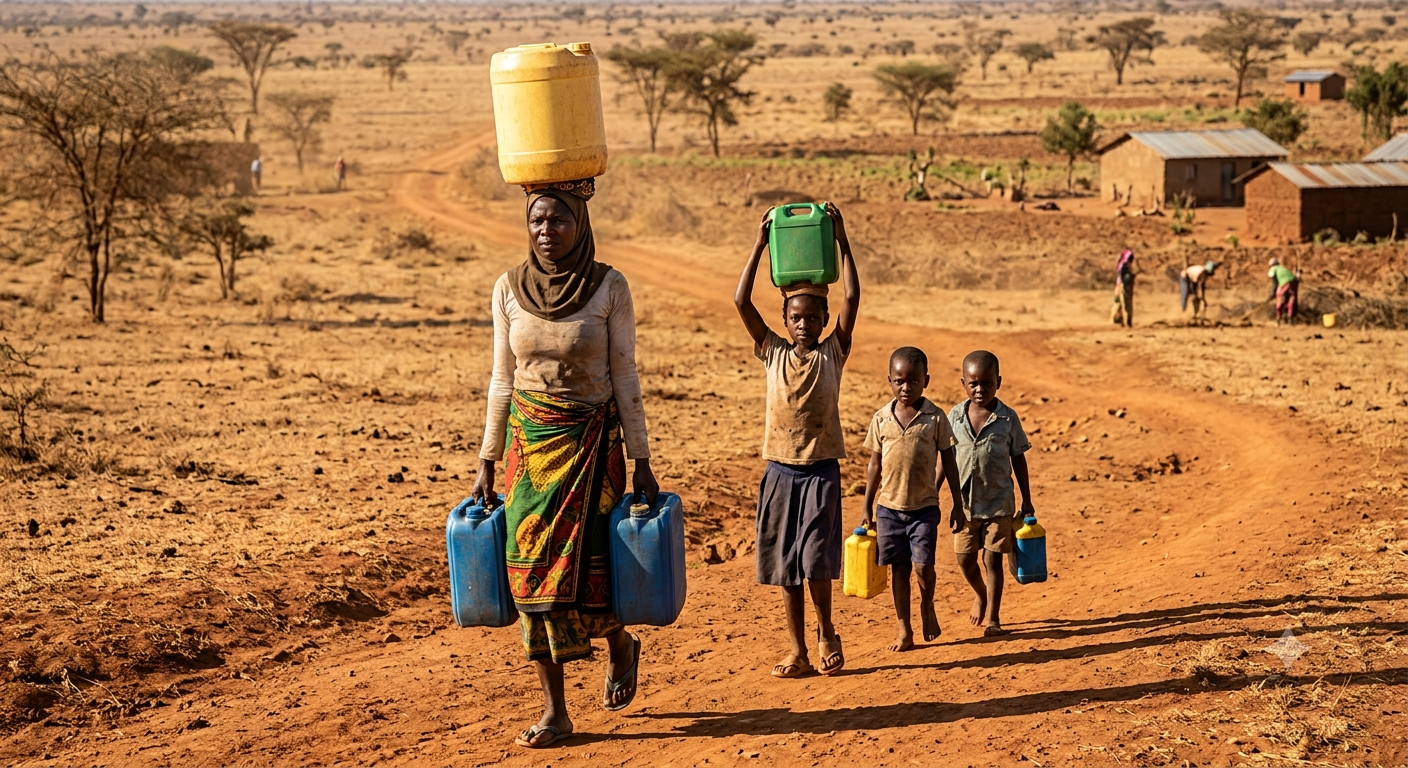
In many villages across rural Africa, the working day does not begin with breakfast or the school run. It begins before sunrise, with a woman lifting an empty 20-litre jerry can onto her back or head and setting out on foot, often with a daughter beside her, toward the nearest water source. By the time she returns, hours later, the rest of the household is only just waking up. For millions of women and girls, this walk is not an occasional chore — it is the first and heaviest task of every single day.
A workday that starts before dawn
According to UNICEF and the WHO/UNICEF Joint Monitoring Programme for Water Supply, Sanitation and Hygiene, women and girls are responsible for water collection in roughly eight out of ten households worldwide that lack water on their premises. Globally, the average round trip is estimated at around 30 minutes — but that average hides a far harsher reality in the driest and most remote parts of Sub-Saharan Africa, where a single trip can take an hour or more each way. Add the time spent queuing at a shared well or borehole, and the two or three trips a day many households need just to cover drinking, cooking, washing, and livestock, and the total time spent fetching water can climb to six hours or more — every single day, for the same woman, for years.
What six hours a day actually costs
Time spent walking for water is time that cannot be spent anywhere else, and the cost shows up in almost every part of a family's life:
- Lost education: Girls are disproportionately pulled out of school, or arrive exhausted after a morning already spent carrying water, to fetch it. In many communities, girls' school attendance rises measurably once a water source is built nearby.
- Physical toll: A full 20-litre jerry can weighs around 20 kilograms. Carried daily on the head or back over uneven terrain, this load is strongly linked to chronic neck, spine, and joint damage in women who have carried water for years.
- Lost income and lost time with family: Hours spent walking are hours not spent farming, running a small business, or simply resting and caring for young children.
- Safety risks: Long walks before dawn or after dusk, often along isolated paths, expose women and girls to a real risk of assault — a risk that is documented across multiple humanitarian assessments in water-scarce regions.
- Health risks from the water itself: When the nearest source is a distant borehole is not an option, many families fall back on closer but unsafe surface water, exposing the household to cholera, typhoid, and parasitic infection.
Why this burden falls on women and girls
In most of the communities affected, water collection is considered women's and girls' work by long-standing custom, passed from mother to daughter. This is rarely questioned locally, not because the burden is invisible, but because there has simply never been an alternative. When a well is built close to home, the custom does not need to be argued away — the need for someone to walk for hours simply disappears, and the time is reclaimed immediately.
What changes when a well is built nearby
ILA Europe has built water wells across East Africa, including hand-pump wells in Uganda and Kenya, each one placed after a hydrogeological survey to make sure it reaches safe, reliable groundwater rather than running dry within a season. The effect on a household that previously spent hours a day fetching water is immediate and measurable:
- A walk that once took hours is replaced by a few minutes to the village pump.
- Girls who were kept home to help fetch water are able to attend school consistently.
- Women gain hours back in their day for income-generating work, rest, or caring for their families.
- Waterborne illness drops sharply once households switch from surface water to a protected borehole.
A water well donation through ILA Europe funds this entire process — the survey, the drilling, the pump, and the handover to a trained village committee — so that the next well built is one more household that no longer has to choose between school, income, and a jerry can.
Give a water well donation today and help give a woman and her daughter their day back.
Frequently asked questions
Ready to support Water Well projects?
You may also like
 General
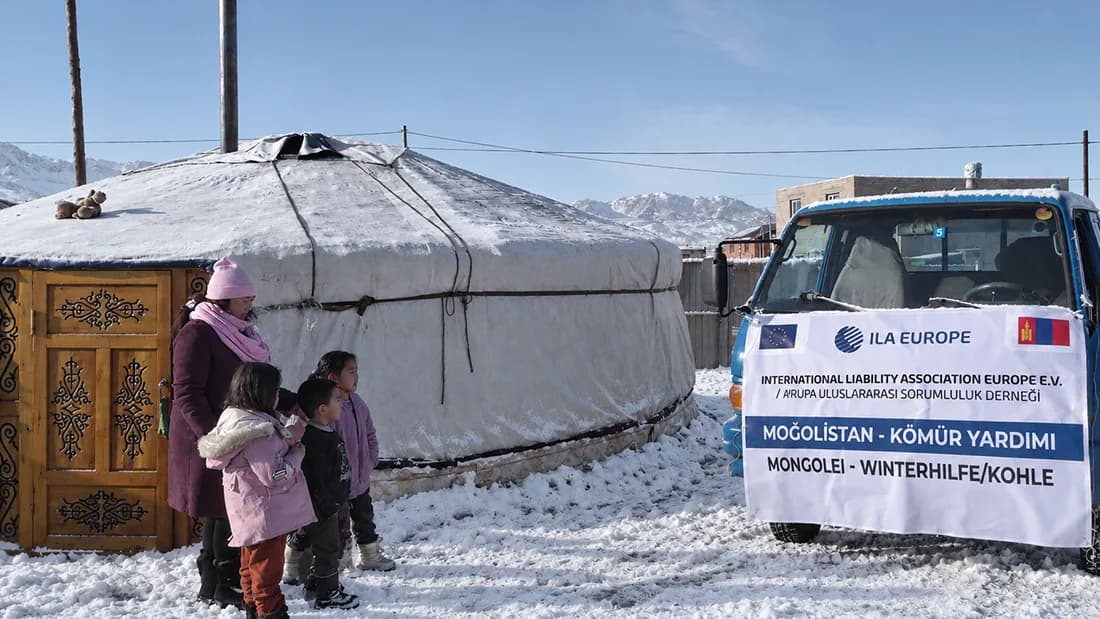
Mongolia Winter Aid: One Sack of Coal, One Warm Home
In one of the coldest capitals in the world, a single sack of coal decides whether a family spends the winter freezing or with hope. Just €25 delivers 250 kg of heating coal to a family in need.
 General
What Are the Kandil Nights? The 2026 Calendar of Blessed Days and Their Meanings
The meaning of the five great Kandil nights, the other blessed days, and every 2026 date in one calendar — including Mawlid al-Nabi on 24 August 2026.