

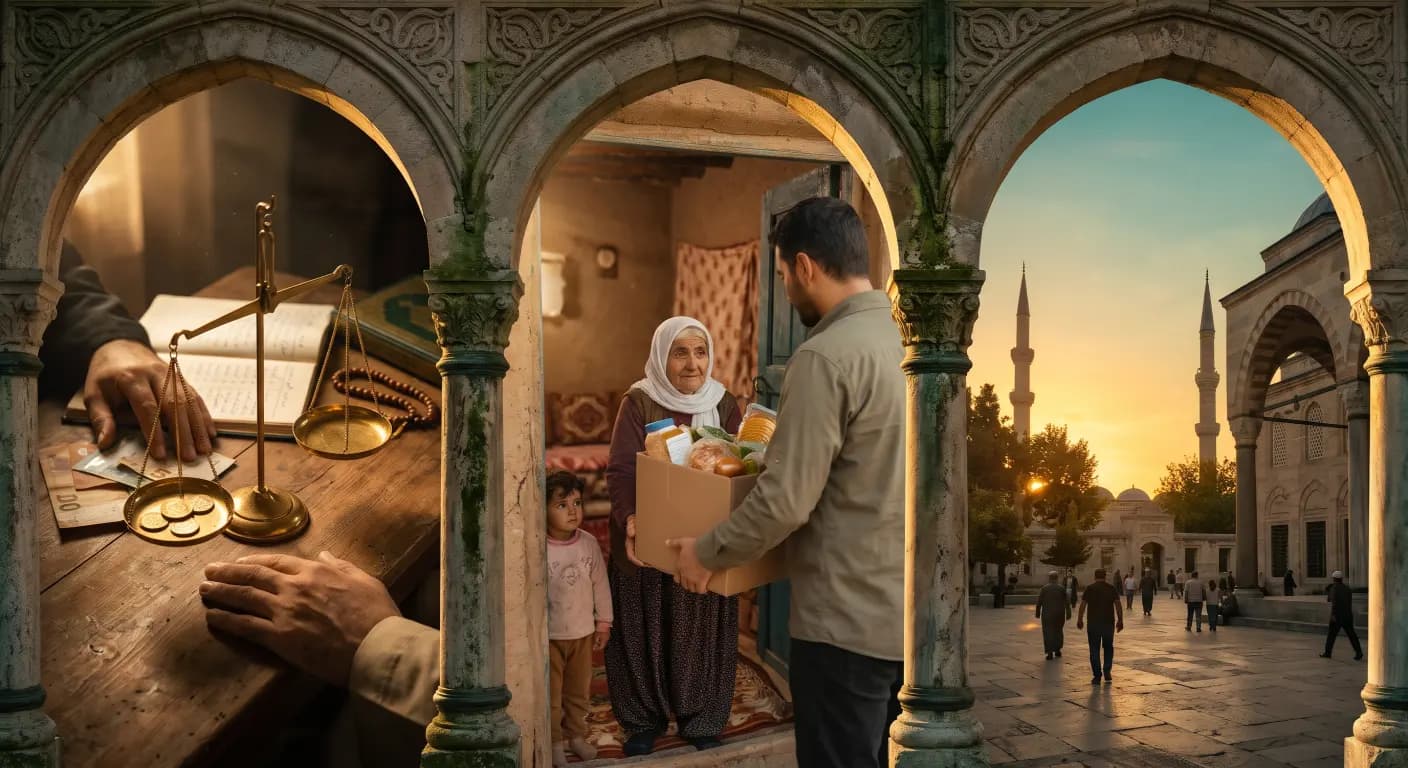
What Is Zakat? Nisab, How to Calculate It and Who Can Receive It
Zakat is the annual obligatory payment of 2.5% on a Muslim's wealth once it reaches the nisab — the value of 80.18 g of gold — after debts and basic needs are deducted, and has been held for a full lunar year. It is the third of the five pillars of Islam and is given to eight groups of recipients named precisely in the Qur'an.
This guide answers the questions that come up every year: Who has to pay zakat? Which assets count? How is zakat calculated step by step — and who is allowed to receive it? Along the way you will find the key evidence from the Qur'an and the Sunnah.
What Does Zakat Mean?
The Arabic word zakat literally means "purity" and "growth". Both describe what zakat does: it purifies the giver's wealth and soul from greed, and — in the Islamic understanding — it makes wealth grow through blessing (barakah) rather than shrink. Legally, zakat is fard: an obligatory act of worship, not a voluntary donation. Denying it calls a foundation of the faith into question; neglecting it out of carelessness is a serious sin.
The Qur'an mentions zakat together with prayer in more than twenty places — a sign that serving Allah and serving people belong together:
وَأَقِيمُوا الصَّلَاةَ وَآتُوا الزَّكَاةَ ۚ وَمَا تُقَدِّمُوا لِأَنفُسِكُم مِّنْ خَيْرٍ تَجِدُوهُ عِندَ اللَّهِ
Wa aqimu al-salata wa atu al-zakah, wa ma tuqaddimu li-anfusikum min khayrin tajiduhu inda Allah.
"Establish prayer and give zakat. Whatever good you send ahead for yourselves, you will find it with Allah." (al-Baqarah, 2:110)
Zakat in the Qur'an and Sunnah
The Prophet Muhammad (peace be upon him) explicitly counted zakat among the foundations on which Islam stands:
بُنِيَ الْإِسْلَامُ عَلَى خَمْسٍ: شَهَادَةِ أَنْ لَا إِلٰهَ إِلَّا اللَّهُ وَأَنَّ مُحَمَّدًا رَسُولُ اللَّهِ، وَإِقَامِ الصَّلَاةِ، وَإِيتَاءِ الزَّكَاةِ، وَالْحَجِّ، وَصَوْمِ رَمَضَانَ
"Islam is built upon five: bearing witness that there is no god but Allah and that Muhammad is the Messenger of Allah, establishing prayer, giving zakat, the pilgrimage, and fasting in Ramadan." (Bukhari, Iman, 2; Muslim, Iman, 21)
When he sent his Companion Mu'adh ibn Jabal to Yemen, he summed up the essence of zakat in a single sentence: it is
تُؤْخَذُ مِنْ أَغْنِيَائِهِمْ فَتُرَدُّ عَلَى فُقَرَائِهِمْ
"… taken from their wealthy and returned to their poor." (Bukhari, Zakat, 1; Muslim, Iman, 29)
Note the word "returned": zakat is not a gift from the rich but a share that belongs to those in need from the outset. The Qur'an says the same: "And in their wealth there was a rightful share for the one who asks and the one who is deprived" (adh-Dhariyat, 51:19). How zakat fits alongside the other acts of worship is covered in our guide to the 5 Pillars of Islam.
Who Has to Pay Zakat? The Conditions
Zakat is obligatory for anyone who meets all of the following conditions:
- Muslim: zakat is an act of worship and therefore applies to Muslims only.
- Adult and of sound mind: in the Hanafi school, the wealth of children and people without full mental capacity is exempt; the other schools require the guardian to pay zakat on their behalf.
- Full ownership: the wealth must belong to you and be freely at your disposal.
- Wealth above the nisab: after deducting debts that are due and basic needs (home, household goods, clothing, a car for personal use, tools of the trade).
- One lunar year (hawl): the wealth must have stayed above the nisab for a full lunar year — about 354 days.
- Growth-capable wealth: zakat applies to assets that grow or are meant to — money, gold, silver, trade goods, livestock, harvests.
On the one-year rule, the Prophet (peace be upon him) said:
لَا زَكَاةَ فِي مَالٍ حَتَّى يَحُولَ عَلَيْهِ الْحَوْلُ
La zakata fi malin hatta yahula alayhi al-hawl.
"No zakat is due on wealth until a year has passed over it." (Ibn Majah, Zakat, 5; Abu Dawud, Zakat, 4)
In practice: the day your wealth first reaches the nisab is your personal zakat date. If your wealth is still above the nisab one lunar year later, zakat is due on what you hold on that day. Many Muslims set their zakat date in Ramadan because good deeds carry extra reward in that month — but this is not required.
The Nisab: When Does Zakat Become Due?
The nisab is the minimum threshold from which wealth becomes zakatable. It comes from the Sunnah and is measured in gold or silver:
- Gold: 20 mithqal, equal to 80.18 g of pure (24-carat) gold.
- Silver: 200 dirhams of silver.
Because most wealth today is held as money, the nisab is converted into euros — so it moves with the gold price. The easiest way to find today's value is our Zakat Calculator, which uses the current gold rate. The nisab also matters at Eid al-Adha: in the Hanafi school, anyone above it on the days of Eid is also obliged to offer Qurbani.
Which Assets Are Subject to Zakat?
Zakatable
- Cash and bank balances — current and savings accounts, including foreign currencies.
- Gold and silver — bars, coins and, in the Hanafi school, jewellery too. The other schools exempt jewellery worn for ordinary personal use.
- Trade goods — a business's stock, valued at its current selling price.
- Receivables — money owed to you that you can expect to be repaid.
- Shares and funds — at least where they are held for trading or resale.
- Property held for sale — for example a plot of land bought as an investment to resell.
Not zakatable
- The home you live in
- Household goods, furniture and clothing
- A car for personal use
- Tools, machinery and equipment used for work
- Rental property itself — here zakat is due on the rental income you have saved
Harvests (ushr) and livestock have their own rates and thresholds, which this guide does not cover in detail.
How to Calculate Zakat: Step by Step With an Example
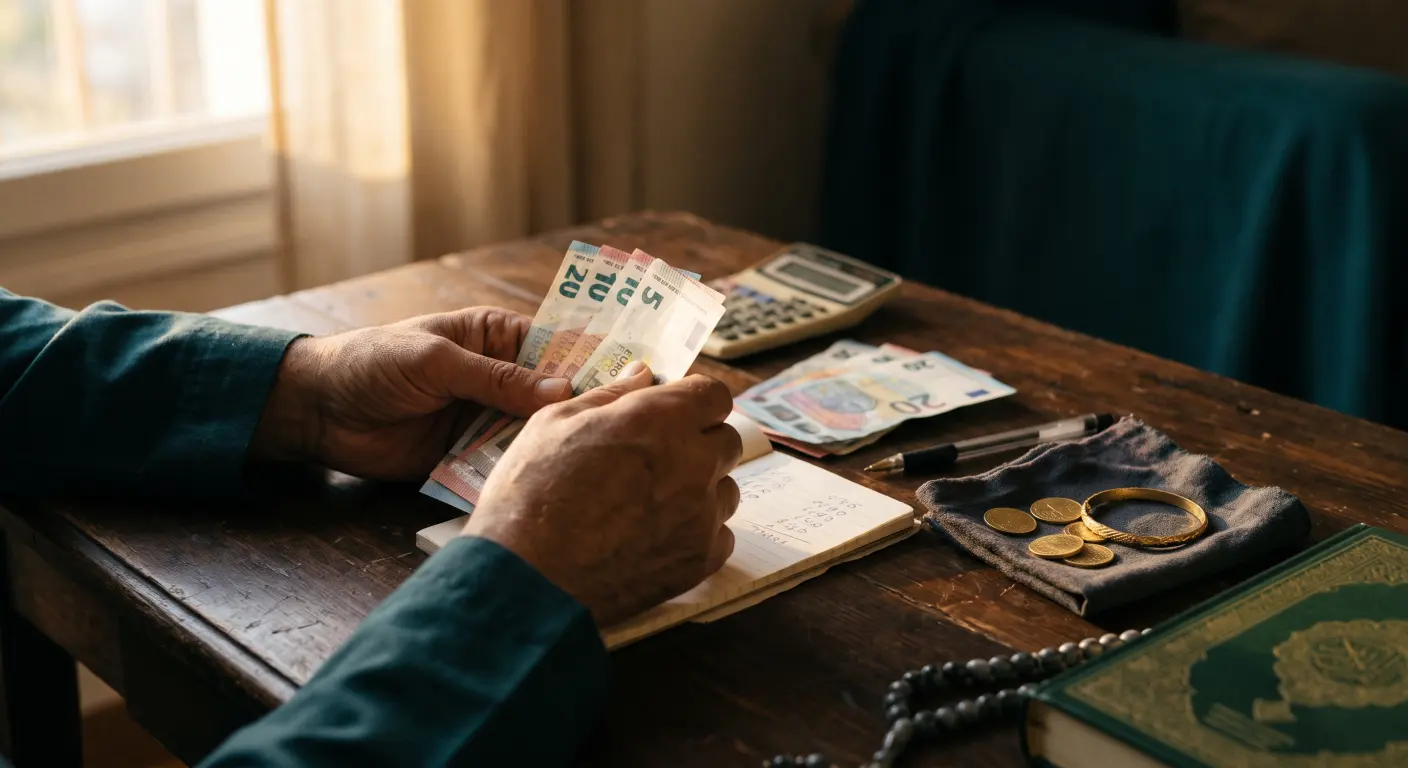
- Set your zakat date: the day your lunar year since reaching the nisab is complete.
- Add up your wealth: cash, bank balances, gold and silver at the day's rate, trade goods, recoverable receivables.
- Deduct debts: liabilities that are due, such as unpaid bills or upcoming loan instalments.
- Compare with the nisab: if the remainder is below the nisab, no zakat is due.
- Calculate 2.5%: if it is above, one fortieth (2.5%) of the whole amount is due as zakat — not just of the part above the nisab.
An example: on her zakat date, Fatima has €3,000 in cash, €6,500 in her bank account and gold jewellery worth €2,500. She has a debt of €2,000 that is due. Her zakatable wealth is therefore 3,000 + 6,500 + 2,500 − 2,000 = €10,000. If that is above the current nisab, her zakat is €10,000 × 2.5% = €250.
If you hold several kinds of assets, the safest route is the ILA Europe Zakat Calculator: it handles cash, gold (in grams or as coins), silver, receivables and debts, and shows the amount due instantly.
Who Can Receive Zakat? The Eight Categories
Unlike voluntary sadaqah, the recipients of zakat are set by Allah Himself in the Qur'an:
إِنَّمَا الصَّدَقَاتُ لِلْفُقَرَاءِ وَالْمَسَاكِينِ وَالْعَامِلِينَ عَلَيْهَا وَالْمُؤَلَّفَةِ قُلُوبُهُمْ وَفِي الرِّقَابِ وَالْغَارِمِينَ وَفِي سَبِيلِ اللَّهِ وَابْنِ السَّبِيلِ ۖ فَرِيضَةً مِّنَ اللَّهِ ۗ وَاللَّهُ عَلِيمٌ حَكِيمٌ
"Zakat is only for the poor, the needy, those employed to administer it, those whose hearts are to be reconciled, for freeing captives, for those in debt, for the cause of Allah, and for the traveller — an obligation from Allah. And Allah is All-Knowing, All-Wise." (at-Tawbah, 9:60)
- The poor (fuqara): those who own something but remain below the nisab.
- The needy (masakin): those who own nothing and cannot provide for themselves.
- Zakat administrators: those appointed to collect and distribute zakat.
- Those whose hearts are to be reconciled: people whose hearts are to be opened to Islam or strengthened in it.
- Freeing captives: historically, buying people out of slavery.
- Those in debt (gharimin): people unable to clear their debts by their own means.
- In the cause of Allah (fi sabilillah): effort spent in the way of Allah.
- The traveller (ibn al-sabil): someone stranded without means on a journey, even if wealthy at home.
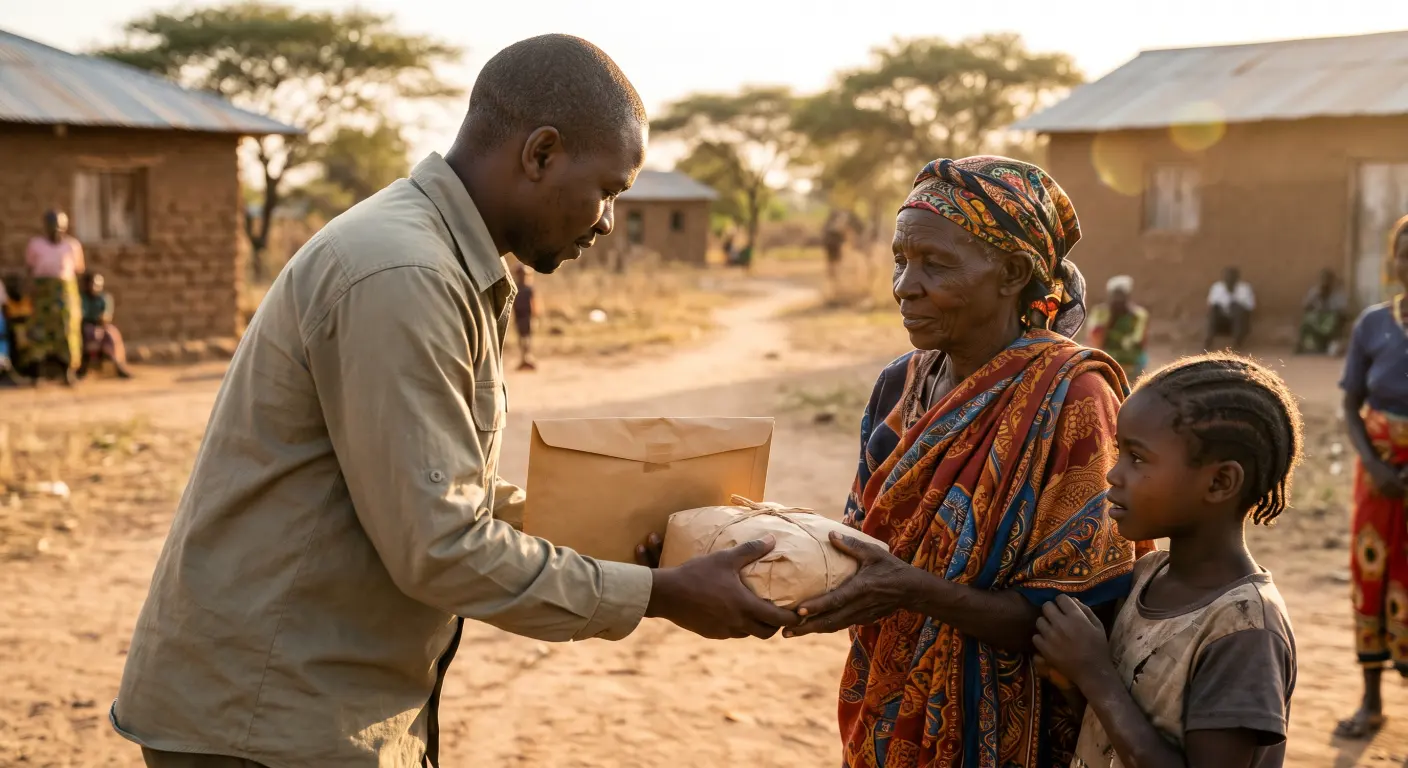
Who Cannot Receive Zakat
- Your own parents and grandparents, and your own children and grandchildren — you are already responsible for their maintenance.
- Your spouse.
- Anyone who themselves owns wealth above the nisab.
Siblings, uncles, aunts and other relatives in need may receive zakat — and according to a hadith, giving to them brings a double reward: one for the charity and one for upholding family ties.
Why Zakat Carries Such Weight
The Qur'an promises multiplied reward to those who give zakat sincerely:
وَمَا آتَيْتُم مِّن زَكَاةٍ تُرِيدُونَ وَجْهَ اللَّهِ فَأُولَٰئِكَ هُمُ الْمُضْعِفُونَ
Wa ma ataytum min zakatin turiduna wajha Allahi fa-ula'ika humu al-mud'ifun.
"And whatever you give in zakat, seeking the Face of Allah — it is those who will have their reward multiplied." (ar-Rum, 30:39)
The Prophet (peace be upon him) affirmed: مَا نَقَصَتْ صَدَقَةٌ مِنْ مَالٍ — "Charity does not decrease wealth" (Muslim, Birr, 69). Just as clear is the warning to those who hoard their wealth:
وَالَّذِينَ يَكْنِزُونَ الذَّهَبَ وَالْفِضَّةَ وَلَا يُنفِقُونَهَا فِي سَبِيلِ اللَّهِ فَبَشِّرْهُم بِعَذَابٍ أَلِيمٍ
"Those who hoard gold and silver and do not spend it in the way of Allah — give them tidings of a painful punishment." (at-Tawbah, 9:34)
A hadith in Bukhari relates that the wealth of anyone who withholds zakat will appear to them on the Day of Resurrection as a serpent that coils around them (Bukhari, Zakat, 3). Zakat is therefore not only a social duty but a matter of one's own accountability before Allah.
Zakat, Sadaqah and Zakat al-Fitr: The Difference
- Zakat: obligatory, 2.5% of wealth above the nisab, once per lunar year, only to the eight categories.
- Sadaqah: voluntary, any amount, any time, for any good cause. More in our article Sadaqah Explained.
- Zakat al-Fitr (Fitrah): a small obligatory payment per person at the end of Ramadan, given before the Eid prayer — separate from the annual zakat on wealth.
Calculate and Give Your Zakat With ILA Europe
With the Zakat Calculator you can find out in a few minutes whether zakat is due and how much — based on the current gold price. You can then donate the calculated amount directly online. If you would also like to give voluntarily, you will find every option under Sadaqah & Zakat donations.
Sources
- Qur'an: al-Baqarah 2:110; at-Tawbah 9:34, 9:60; ar-Rum 30:39; adh-Dhariyat 51:19.
- Hadith: Bukhari, Iman, 2; Muslim, Iman, 21 (Five pillars); Bukhari, Zakat, 1; Muslim, Iman, 29 (Hadith of Mu'adh); Bukhari, Zakat, 3; Muslim, Birr, 69; Ibn Majah, Zakat, 5; Abu Dawud, Zakat, 4.
Frequently asked questions
Ready to support Zakat projects?
You may also like
 General
Mongolia Winter Aid: One Sack of Coal, One Warm Home
In one of the coldest capitals in the world, a single sack of coal decides whether a family spends the winter freezing or with hope. Just €25 delivers 250 kg of heating coal to a family in need.
 General
What Are the Kandil Nights? The 2026 Calendar of Blessed Days and Their Meanings
The meaning of the five great Kandil nights, the other blessed days, and every 2026 date in one calendar — including Mawlid al-Nabi on 24 August 2026.